Jackery Canada Solar Generator Review: Is a Bundle Worth It?
A Canadian buyer’s look at two Jackery solar kits: what the panel premium buys, where the smaller bundle makes sense, and what to plan before charging at a campsite or cottage.
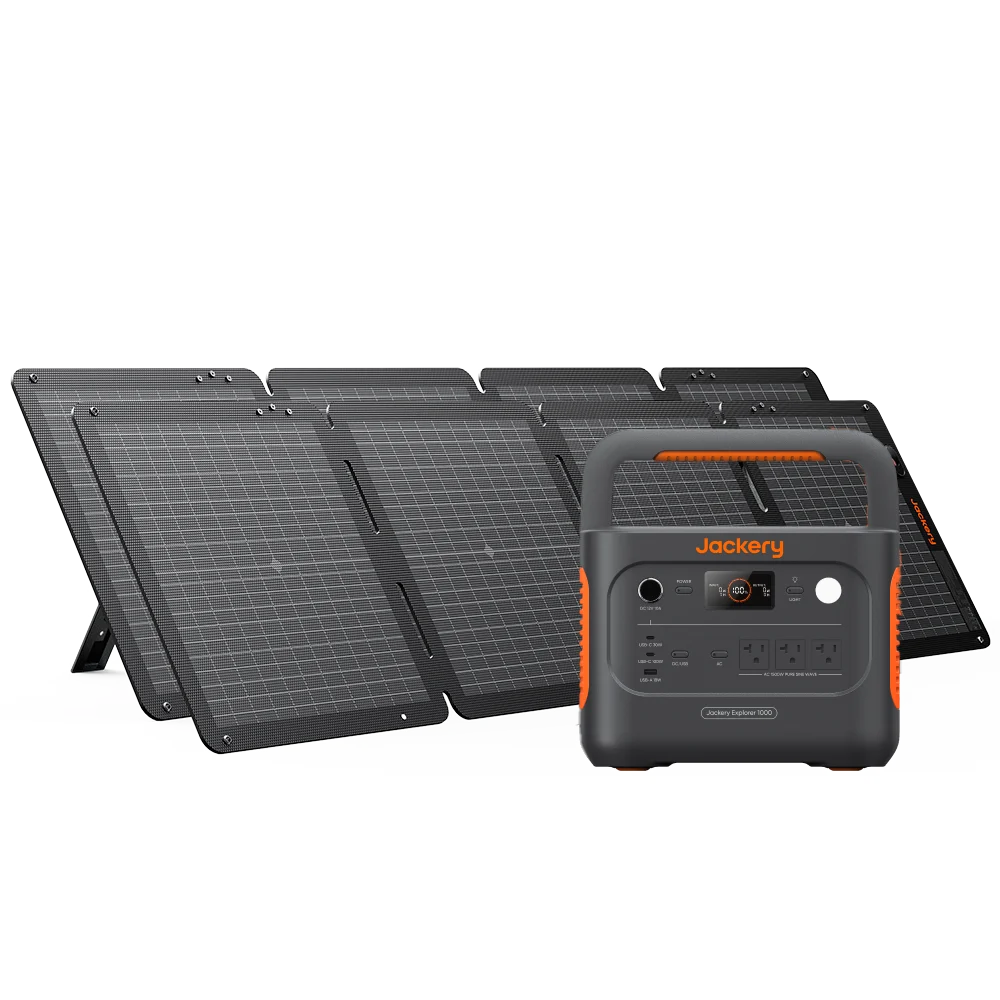
Explorer 1000 v2 + SolarSaga 100 Air × 2
C$1,079 C$1,599
Save C$520 against the displayed comparison price
Battery storage is only half the decision. The other half is whether you have the space, sunlight and time to use the panels you are paying for.
Check current Canadian kit offersAffiliate link · Price checked October 22, 2026. This is an updated offer, not a claim about the September publication price. Taxes, eligibility and final checkout total may differ.
Buy the panels for a repeatable routine, not an imagined emergency
A solar generator bundle is a battery power station plus compatible solar panels, not a fuel-powered machine. Its appeal is the option to replenish stored energy away from an outlet. The catch is that the panels need usable sunshine, room to unfold and someone willing to position them. A discounted kit still makes a poor purchase if its panels stay in the garage.
Our assessment: the Explorer 1000 v2 kit is the more approachable choice for car-camping electronics and modest portable loads. The HomePower 3600 Plus kit fits a different brief: more stored energy and higher output for a cottage or selected household essentials. Neither kit makes weather irrelevant or turns a battery into unlimited power.
Worth a closer look if…
Drivers with space for panels and a regular opportunity to set them up in a sunny, supervised spot.
Pass on the bundle if…
Choose a station-only package if you will normally recharge from a wall outlet, or cannot safely place panels outside. Small-device travellers may need only a power bank.
The useful number is the panel premium—not just the crossed-out price
The checked Explorer kit costs C$430 more than the C$649 station-only offer. Two separately listed SolarSaga 100 Air panels total C$518 at C$259 each, making the kit C$88 less than those three items purchased separately at the checked prices. That is a more useful comparison than treating the full advertised C$520 markdown as savings created by bundling.
For the HomePower kit, the difference above the C$2,299 station-only offer is C$570. A separately listed SolarSaga 340 X costs C$699, so the checked kit is C$129 less than buying that station and panel separately. This arithmetic compares the listed items only; coupons, taxes, delivery, compatible cables and future price changes can alter the outcome.
| Exact kit | Offer / displayed comparison | Battery / rated AC output | Included solar |
|---|---|---|---|
| Explorer 1000 v2 + SolarSaga 100 Air × 2 |
C$1,079
Save C$520 |
1,070Wh 1,500W |
Two 100W SolarSaga 100 Air panels |
| HomePower 3600 Plus + SolarSaga 340 X |
C$2,869
Save C$2,030 |
3,584Wh 3,600W |
One 340W SolarSaga 340 X assembly, made from four SolarSaga 85 panels |
Explorer 1000 v2 + two 100 Air panels
C$88 below the checked separate-item total of C$1,167.
HomePower 3600 Plus + SolarSaga 340 X
C$129 below the checked separate-item total of C$2,998.
Two kits, two very different jobs
Explorer 1000 v2 + SolarSaga 100 Air × 2
C$1,079 C$1,599
Best fit: Campsite charging for phones, cameras and laptops, with occasional compatible AC loads.
1,070Wh · 1,500W
Two 100W SolarSaga 100 Air panels
The attraction here is manageable scope. The station’s published 24.2lb weight is about 11kg; each 100 Air panel adds 3.2kg. Count the whole kit when deciding who will move it from the trunk to the campsite. This is a car-based setup, not something to slip into a hiking pack.
The two panels provide 200W of combined nameplate capacity, not a guaranteed 200W charging rate. Importantly, Jackery’s four-hour solar charging example for this station uses four 100 Air panels. This two-panel bundle should not be bought on that expectation. Its fast emergency-charging headline refers to a different charging method, not a promise about sunshine.
For a weekend with modest electronics, the smaller station can avoid paying for unused capacity. Check each appliance’s running and starting requirements first: a 1,500W output specification is a load limit, not a statement that every appliance can run all weekend.
Reasons to consider it
- Lower initial cost and less bulk than the larger kit.
- Two separate panels offer placement flexibility.
Tradeoffs to accept
- Panel positioning and packing add work to every stop.
- The included panel count differs from the advertised four-panel charging example.
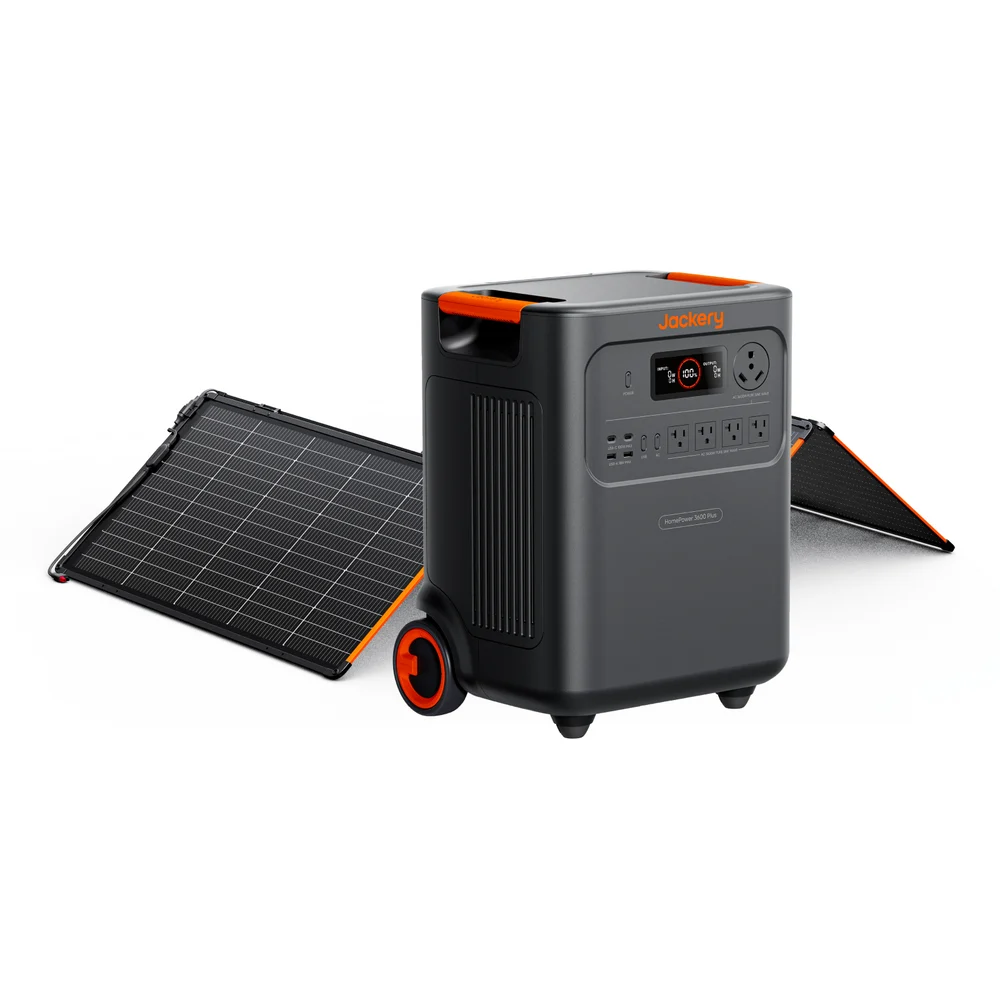
HomePower 3600 Plus + SolarSaga 340 X
C$2,869 C$4,899
Best fit: A stationary cottage or home base where extra stored energy matters more than compact packing.
3,584Wh · 3,600W
One 340W SolarSaga 340 X assembly, made from four SolarSaga 85 panels
This package provides substantially more battery capacity and output, with wheels and a pull handle for moving the station. That favours a place where it can stay ready rather than a trip with repeated lifting. Check stairs, storage clearances and vehicle loading before assuming that wheels solve every carrying problem.
The SolarSaga 340 X comprises four 85W panels. Do not confuse those four sections with four complete 340W arrays. The included assembly is rated at 340W, and a large battery does not automatically mean a quick solar refill. A longer cottage stay needs a charging plan as much as a capacity upgrade.
The C$2,869 selection reviewed here is not the C$3,469 package that also lists a manual transfer switch. A single station supplies 120V output; the brand’s 240V proposition involves additional equipment and a second unit. Do not infer whole-home or well-pump compatibility from this bundle name.
Reasons to consider it
- More stored energy and output for a larger, checked load list.
- A defined solar bundle rather than a separate panel-compatibility search.
Tradeoffs to accept
- Higher outlay and a more involved packing footprint.
- Transfer-switch equipment and a second power station are not included in this reviewed selection.
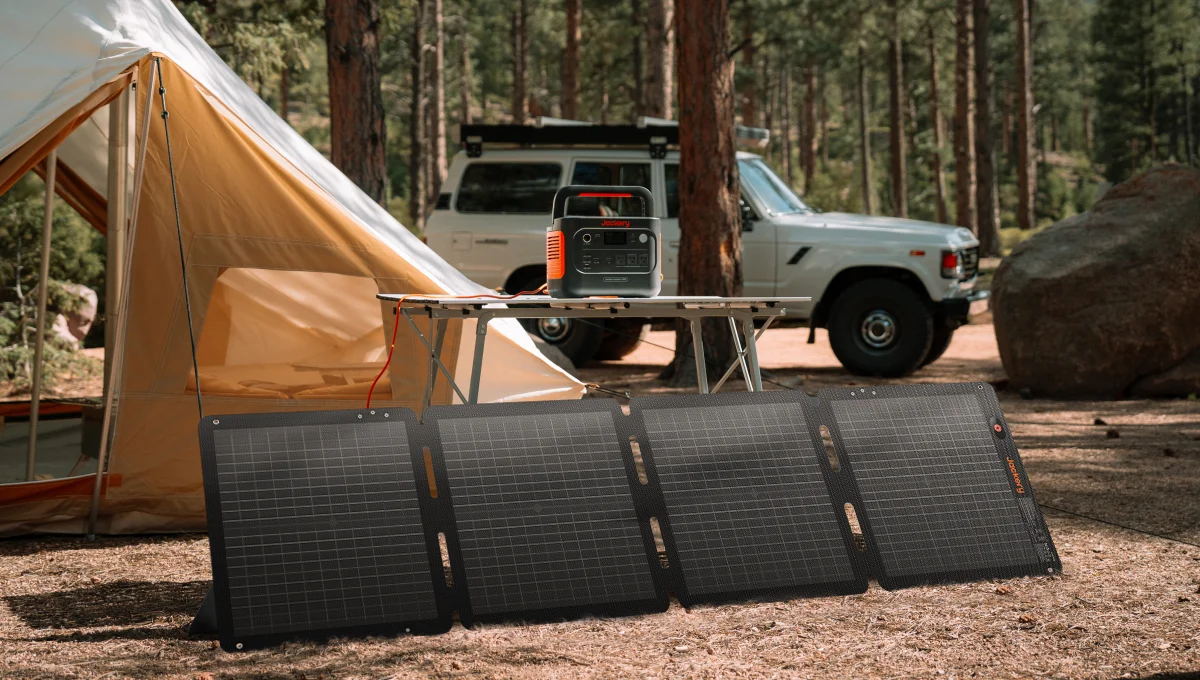
A solar kit has to fit your routine, not just your trunk
Before leaving
Charge from the wall, inspect the kit’s supplied parts, and try the intended appliances while there is time to resolve a mismatch. Keep a written list of cables rather than relying on a lifestyle photograph to show everything included.
On arrival
Find unobstructed sun for the panels and a dry, ventilated position for the station. Avoid blocking a path with cables. Check connector compatibility and the station’s input limits before adding or rearranging panels.
Through the day
Check the displayed solar input and reposition panels as shade moves. Compare energy coming in with the loads drawing energy out. A laptop left charging while solar input falls can quietly change the day’s energy budget.
Before packing
Disconnect according to the instructions, clean and dry the panels, check cables and fold everything into its storage arrangement. Allow time for this routine instead of treating solar charging as a fit-and-forget accessory.
Canadian weather changes the value equation
A shaded Ontario campsite and an open Prairie stop are not equivalent solar opportunities. Short autumn days, cloud, trees and snow can constrain collection when stored energy is most welcome. Plan a fallback charging source rather than counting on the brochure’s best-case solar result.
Both panel pages use IP68 language, but their FAQs also warn against leaving panels in rain or immersing them. Follow that more cautious instruction. Panel weather resistance does not make the connected power station waterproof, and a panel’s temperature range is not the battery’s charging-temperature allowance. Check the exact station manual before cold-weather charging.
Match the battery to the job before adding solar
Watt-hours describe stored energy; watts describe power delivered at a moment. Neither figure alone predicts useful runtime. Appliance cycling, conversion losses, temperature and the chosen operating mode all matter. Write down the actual devices you need, then check total running load and starting surge against the station documentation.
For occasional phone and laptop charging, the larger system could be expensive surplus. For sustained heating or several demanding appliances, even the larger kit may be a poor substitute for a properly designed backup system. Never backfeed a household outlet. Home-circuit integration needs suitable equipment and qualified local advice; these kits are not a sole life-support backup.
What to confirm before the order is final
Read the cart’s exact bundle name and component list. Warranty terms are component-specific: the reviewed station pages advertise three years plus a two-year direct-store extension, while the 100 Air panel page lists one plus two years and the 340 X page lists five years. Do not assume one kit-wide term.
The Canadian service policy starts its 30-day return window on receipt and requires a return authorisation. Change-of-mind return shipping and handling can be deducted; original condition matters. Keep packaging, and allow for separate station and panel deliveries rather than scheduling a departure around an estimated arrival date.
Before you place a Canadian order
- Confirm the precise panel count, charging cables and adapters in the selected bundle.
- Check appliance loads, starting requirements, charging temperatures and available storage space.
- Compare the final Canadian-dollar checkout total with the current station-only and separate-panel prices.
- Save the order record and component warranty terms; inspect every delivery before the return window closes.
Jackery Canada solar generator review: common questions
Is a Jackery solar generator bundle worth buying in Canada?
It can be if you will use the panels regularly and the complete kit costs less than compatible parts bought separately. If your charging routine is almost entirely indoors, a discounted station-only option may be better value.
Does the Explorer 1000 v2 two-panel kit recharge in four hours?
Do not assume that. The product page’s four-hour solar example uses four SolarSaga 100 Air panels, while the reviewed bundle contains two. Weather, positioning and simultaneous loads also affect charging.
Is the SolarSaga 340 X four separate 340W panels?
No. The listed 340 X assembly combines four SolarSaga 85 panels for 340W rated total output. Its modular construction should not be mistaken for four times that rating.
Are these September 2026 sale prices?
No. The article was first published September 30, 2026, but this offer update was checked October 22, 2026. Prices may change again; use the current cart as the final reference.
How we assessed these offers
We compared the Canadian store’s selected bundle prices, listed station offers, panel pages and service policy on October 22, 2026. Price differences are our arithmetic; scenario recommendations are editorial judgement. We did not measure charging speed, capacity, noise or appliance runtime, and assign no numerical product score.
Images are official Jackery promotional imagery. The campsite photograph shows a different panel configuration from the reviewed two-panel Explorer bundle. Product selection photos, not the lifestyle scene, identify the kits discussed.
Official sources checked October 22, 2026
- Explorer 1000 v2 solar bundle specifications ca.jackery.com/products/jackery-solar-generator-1000-v2
- HomePower 3600 Plus bundle selections ca.jackery.com/products/jackery-solar-generator-homepower-3600-plus
- SolarSaga 100 Air specifications and cautions ca.jackery.com/products/jackery-solarsaga-100-air
- SolarSaga 340 X specifications and cautions ca.jackery.com/products/jackery-solarsaga-340-x-solar-panel
- Canadian-store station offers ca.jackery.com/pages/deals
- Canadian service and return policy ca.jackery.com/pages/policy
Source addresses are provided for transparency, not as extra shopping links. Every commercial link and promotional image uses the same disclosed affiliate destination.
Continue planning with our Travel guides and Home & Garden advice. Questions or corrections: service@magazinesaas.com.